


If you have ever started a new job, worked with a company, developed an idea, or shared confidential business information, you may have come across the term NDA. But what is a NDA, and why do businesses and individuals use these agreements?
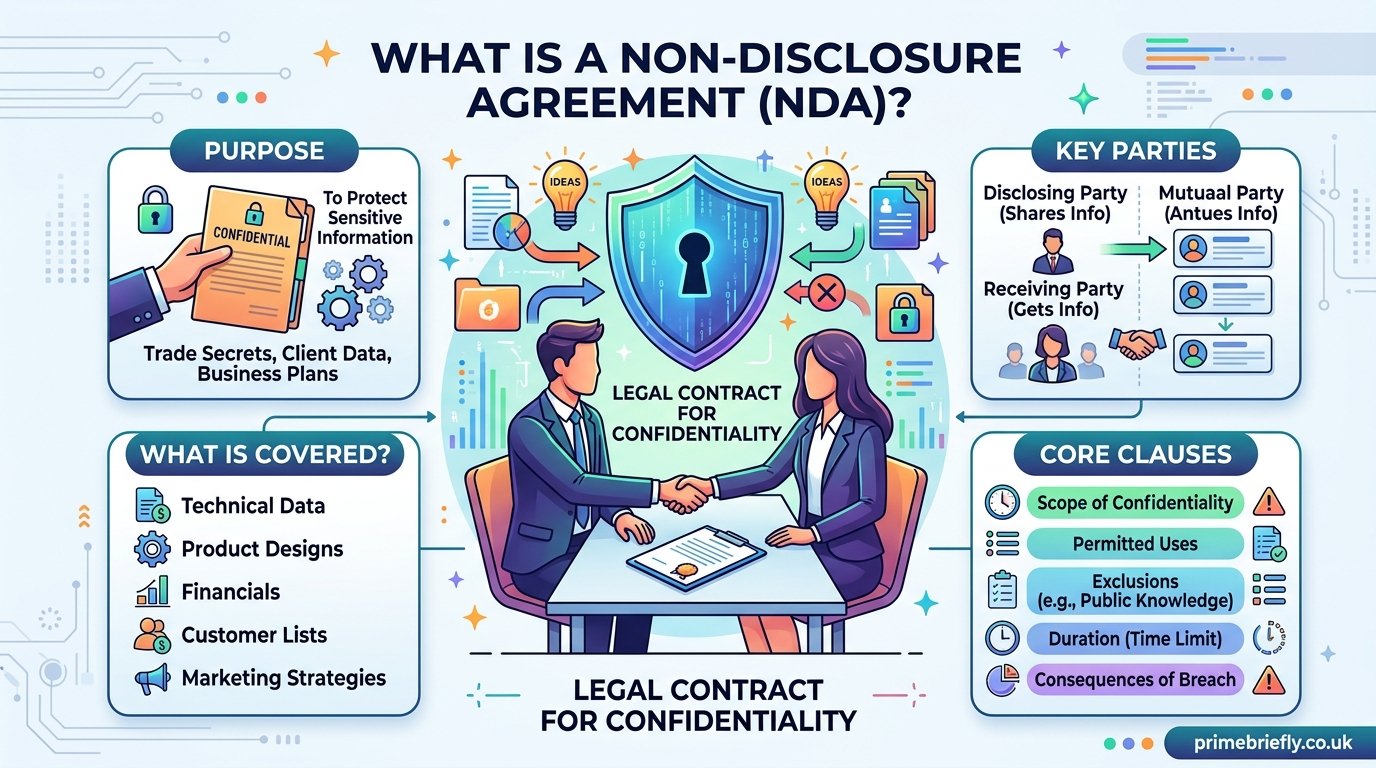
An NDA, or Non-Disclosure Agreement, is a legal agreement designed to protect confidential information. It creates an obligation for one or more people to keep certain information private and not share it with unauthorized individuals or organizations.
NDAs are common in business, employment, technology, entertainment, consulting, research, and many other areas. They can help protect valuable information such as business plans, customer information, product designs, What Is an NDA? financial details, software concepts, and trade secrets.
Understanding what an NDA does is useful because signing one can create important legal responsibilities. At the same time, an NDA does not automatically mean that every piece of information you encounter is secret. The agreement normally defines what information is considered confidential and explains how it may be handled What Is an NDA?
What Is a NDA and How Does It Work?
A Non-Disclosure Agreement is a contract between parties that establishes rules for handling confidential information. Depending on the situation, one person may disclose information to another person, or both parties may agree to protect each other’s confidential information.
For example, imagine a company is considering hiring a software developer to work on a new product. Before sharing detailed information about the product, the company may ask the developer to sign an NDA. The agreement could explain which information must remain confidential and how the developer is allowed to use it What Is an NDA?.
The basic purpose is straightforward: the parties agree that certain information should not be disclosed or used improperly. If someone violates the agreement, the contract may provide remedies or allow the affected party to seek legal relief, depending on the agreement and applicable law What Is an NDA?.
An NDA does not necessarily prevent someone from using all information they learn. Instead, it generally focuses on information identified as confidential under the contract. The exact scope depends on the language of the agreement.
What Information Can an NDA Protect?
The information covered by an NDA can vary significantly. Businesses may use these agreements to protect information that gives them a competitive advantage or that they have a legitimate reason to keep private What Is an NDA?.
Common examples can include product plans, technical information, business strategies, pricing information, customer or supplier details, marketing plans, financial information, research findings, software-related information, and proprietary processes What Is an NDA?.
An NDA may also define confidential information broadly, while providing exceptions for information that is already publicly available or becomes public through no fault of the receiving party.
This is important because not every piece of information can reasonably remain confidential forever. A well-drafted agreement usually explains what information is protected and when the confidentiality obligation applies What Is an NDA?.
What Are the Main Types of NDAs?
NDAs can be structured in different ways depending on who is sharing information and why. One common distinction is between unilateral and mutual agreements.
A unilateral NDA generally involves one party disclosing confidential information to another party. The receiving party agrees to keep the information confidential. This arrangement can be common when an employer shares proprietary information with an employee or when a company shares confidential material with a contractor What Is an NDA?.
A mutual NDA is generally used when both parties expect to exchange confidential information. For example, two businesses discussing a potential partnership may need to share sensitive information with each other. Both sides can agree to protect the information received from the other party What Is an NDA?.
There can also be agreements designed for specific situations. A business may use confidentiality provisions as part of an employment contract, consulting agreement, partnership arrangement, or transaction involving the potential purchase or sale of a company What Is an NDA?.
What Is Usually Included in an NDA?
Although every agreement can be different, an NDA commonly identifies the parties involved and describes the confidential information covered by the contract.
It may also explain how the receiving party can use the information, who is permitted to access it, and what steps should be taken to protect it. Some agreements address whether information can be shared with employees, What Is an NDA? professional advisers, contractors, or other authorized individuals.
Another important provision is the duration of the confidentiality obligation. Some information may need to remain confidential for a specific period, while certain categories of information may be protected for a longer period where legally appropriate.
The agreement may also explain what happens when the relationship ends. For example, it may require confidential documents or other materials to be returned or destroyed when they are no longer needed.
Because contracts can have significant legal consequences, the exact wording matters. An NDA should be reviewed carefully before it is signed, particularly when the agreement is broad or involves valuable intellectual property What Is an NDA?.
Why Do Companies Use NDAs?
Businesses often depend on information that competitors or unauthorized individuals should not have. An NDA provides a contractual framework for protecting that information when it needs to be shared.
Consider a startup preparing to show a potential investor a new product concept. The company may need to reveal technical details, market research, financial projections, or business plans. What Is an NDA? A confidentiality agreement can establish expectations about how that information should be handled.
Companies can also use NDAs when working with outside professionals. A designer, developer, consultant, marketing agency, or contractor may need access to internal information to perform their work. Confidentiality terms can help clarify their responsibilities.
In employment settings, confidentiality provisions may protect business information that employees encounter as part of their jobs. However, the enforceability and appropriate scope of an NDA can depend on the applicable law and circumstances.
NDAs are therefore not simply documents designed to make people afraid of sharing information. Their primary purpose is to establish clear expectations and protect legitimate confidential interests What Is an NDA?.
Are NDAs Always Enforceable?
An important point is that signing an NDA does not automatically guarantee that every provision will be enforceable. Contract law varies by jurisdiction, and courts can examine whether particular provisions are lawful and reasonable.
The wording of the agreement, the type of information involved, the relationship between the parties, and the applicable laws can all matter. Some jurisdictions may also restrict certain confidentiality provisions or impose additional requirements in particular circumstances What Is an NDA?.
An NDA generally cannot be assumed to override other legal rights. For example, laws may protect certain types of reporting or disclosures regardless of what a private contract says.
Because of these differences, anyone dealing with an important NDA should consider obtaining advice from a qualified lawyer who understands the relevant jurisdiction and situation What Is an NDA?.
What Happens If Someone Violates an NDA?
If a person discloses confidential information in violation of an NDA, the consequences depend on the agreement and applicable law. A company or other affected party may have contractual remedies available to it.
Potential consequences can include financial claims, court proceedings, or requests for orders designed to prevent further disclosure. The specific remedies available will depend on the circumstances.
Not every disagreement about confidentiality automatically becomes a lawsuit. Sometimes the parties resolve the issue through communication or negotiation. However, a serious disclosure involving valuable information can create significant legal and financial problems.
This is why people should read an NDA carefully before signing it. Understanding the obligations in advance is generally much better than discovering them after a dispute occurs What Is an NDA?.
How to Review an NDA Before Signing
Before signing an NDA, pay attention to the definition of confidential information. Ask yourself whether you understand exactly what information the agreement covers.
You should also look at how the information can be used, who can access it, and how long the confidentiality obligation lasts. Check whether the agreement requires you to return or destroy documents or electronic materials at the end of the relationship What Is an NDA?.
Another important consideration is whether the agreement contains provisions that go beyond confidentiality. Some documents may include additional restrictions or obligations that deserve separate attention.
If the agreement is confusing, unusually broad, or connected to an important business or employment decision, consider asking a qualified legal professional to review it. A lawyer can explain how the provisions may apply to your particular circumstances.
Final Thoughts: What Is a NDA?
So, what is a NDA? A Non-Disclosure Agreement is a contract that establishes obligations concerning confidential information. It is commonly used when people or organizations need to share sensitive information while reducing the risk of unauthorized disclosure.
NDAs can be unilateral or mutual, and they can cover many types of information depending on the circumstances. A typical agreement may define confidential information, establish permitted uses, identify confidentiality responsibilities, and explain how long those responsibilities last.
However, an NDA is not a one-size-fits-all document. Its meaning and enforceability depend on its wording, the surrounding circumstances, and applicable law. Anyone asked to sign an important NDA should read it carefully and seek appropriate legal advice when necessary.
In simple terms, an NDA is about trust backed by a legal agreement. When used appropriately, it helps parties understand what information should remain private and what responsibilities come with receiving it.
