


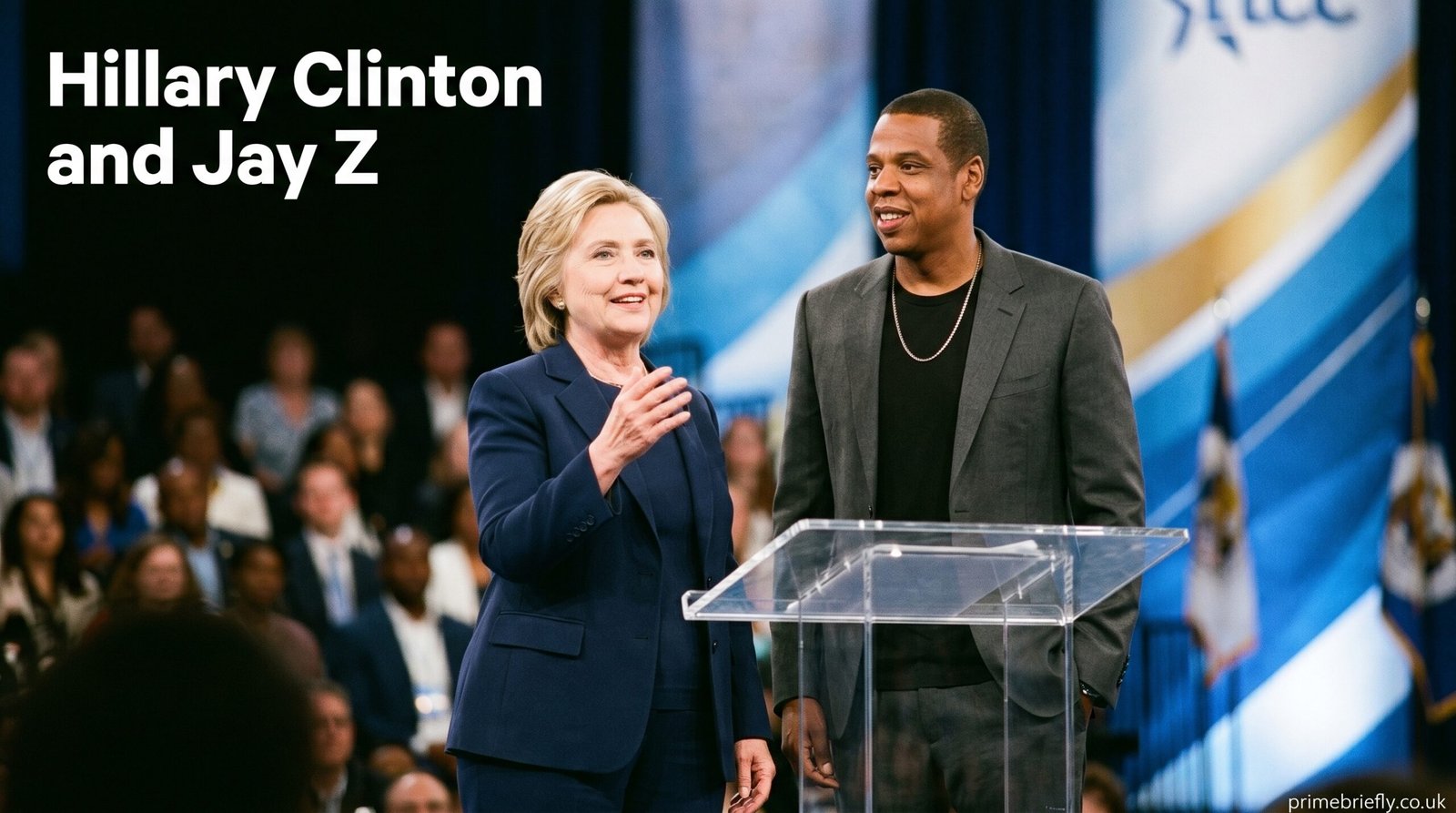
The connection between Hillary Clinton and Jay Z became one of the most talked-about political and entertainment stories during the 2016 United States presidential election. Their public appearances together symbolized a major shift in how modern political campaigns used celebrity influence to reach voters, shape public conversations, and dominate media coverage. The partnership between the former Secretary of State and one of the world’s most influential music icons was not simply about endorsements. It reflected the growing relationship between politics, pop culture, social activism, race, and digital media in modern America.
Interest in Hillary Clinton and Jay Z continues years after the 2016 election because the topic combines several powerful cultural themes. People still search for information about Jay Z supporting Hillary Clinton, Beyoncé and Hillary Clinton campaign events, celebrity political endorsements, and the role of music artists in presidential elections. The topic also remains relevant because it highlights how political campaigns increasingly depend on famous personalities to influence voter engagement, especially among younger audiences and minority communities. The Cleveland rally featuring Hillary Clinton, Jay Z, and Beyoncé became a defining moment of election-year media coverage and remains one of the most memorable celebrity-backed campaign events in recent political history.
How Hillary Clinton and Jay Z Became Politically Connected
The political relationship between Hillary Clinton and Jay Z developed during Clinton’s presidential campaign in 2016, although both had been connected to Democratic political circles long before that election cycle. Jay Z had previously supported Democratic leaders such as Barack Obama and participated in political discussions involving race, criminal justice reform, education, and economic inequality. Clinton’s campaign recognized the importance of building relationships with influential cultural figures who could help energize voters and increase turnout in key battleground states.
At the time, Jay Z was not only one of the most successful rappers in the world but also a respected entrepreneur and influential public figure. His business ventures, music legacy, and social activism gave him credibility beyond the entertainment industry. Clinton’s campaign believed that partnerships with respected artists like Jay Z could help strengthen support among Black voters, urban communities, and younger audiences who were highly active on social media platforms.
The collaboration reflected broader changes happening in political communication. Presidential campaigns were no longer relying solely on traditional television advertising and policy speeches. Instead, campaigns increasingly used entertainment events, celebrity appearances, viral moments, and digital media strategies to reach the public. Jay Z’s involvement with Hillary Clinton demonstrated how music and politics had become deeply connected in the modern media landscape.
The 2016 Cleveland Rally That Captured National Attention
One of the most important moments in the Hillary Clinton and Jay Z story occurred in Cleveland, Ohio, just days before the 2016 presidential election. The Clinton campaign organized a major get-out-the-vote concert featuring Jay Z, Beyoncé, Chance the Rapper, and Big Sean. The event attracted enormous national media attention because it brought together politics, celebrity culture, live entertainment, and social activism on one highly publicized stage.
The rally was designed to motivate voters in Ohio, which was considered one of the most important swing states in the election. Clinton addressed the audience directly, emphasizing themes such as unity, diversity, equality, and civic responsibility. Jay Z also delivered political remarks during the event, criticizing divisive political rhetoric and encouraging Americans to vote. Beyoncé spoke emotionally about women’s leadership and the historic significance of potentially electing the first female president of the United States.
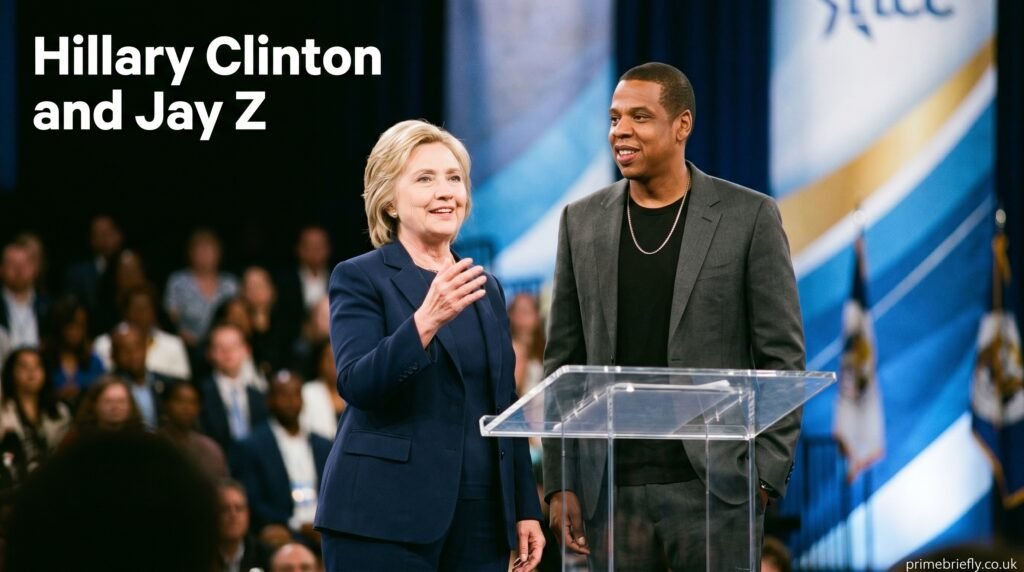
The event generated massive coverage across television networks, newspapers, music publications, and online platforms. Images of Hillary Clinton standing beside Jay Z and Beyoncé quickly spread across social media. Political commentators debated whether celebrity appearances could actually influence voter behavior or simply energize people who already supported a candidate. Regardless of political opinion, the Cleveland rally became one of the defining cultural moments of the 2016 election season.
Beyoncé and Jay Z’s Combined Influence on the Clinton Campaign
Although many searches focus specifically on Hillary Clinton and Jay Z, Beyoncé played an equally important role in the campaign’s celebrity outreach efforts. Together, Jay Z and Beyoncé represented one of the most influential celebrity couples in the world. Their endorsement brought enormous visibility to Clinton’s campaign and helped attract younger audiences who followed entertainment culture more closely than traditional political news.
Beyoncé’s speech during the Cleveland rally became one of the most widely discussed moments of the campaign event. She talked about her daughter and the importance of women seeing themselves represented in positions of leadership. Her remarks connected emotional family themes with broader political issues involving gender equality, women’s empowerment, and representation in government. Many supporters viewed her speech as inspiring and historically meaningful.
Jay Z’s presence added a different but equally important perspective. His music career often addressed social inequality, racism, economic struggles, and systemic injustice. Clinton’s campaign attempted to align itself with many of the social issues Jay Z discussed throughout his career. By appearing together publicly, the campaign aimed to present itself as culturally aware, socially progressive, and connected to diverse American communities. Critics, however, argued that celebrity appearances sometimes distracted from serious policy discussions and failed to address deeper economic frustrations among voters.
Celebrity Endorsements in Modern Presidential Campaigns
The Hillary Clinton and Jay Z partnership represented a larger trend involving celebrity endorsements in modern politics. Over the past several decades, entertainers, athletes, musicians, and internet personalities have become increasingly involved in election campaigns. Political strategists often view celebrity support as a valuable tool for attracting media attention, increasing voter enthusiasm, and encouraging civic participation among younger demographics.
Celebrity endorsements can generate massive publicity in ways traditional campaign events cannot. When Jay Z and Beyoncé appeared alongside Hillary Clinton, the event immediately became headline news across entertainment media, political publications, television broadcasts, and social media platforms. Millions of people who may not normally watch political rallies became aware of the campaign through celebrity-related coverage and online discussions.
At the same time, celebrity involvement in politics remains controversial. Critics often argue that entertainers lack political expertise and that campaigns should focus more on policy than publicity. Some observers believed that Hillary Clinton’s reliance on celebrity endorsements reinforced perceptions that elite political figures were disconnected from working-class voters. Others defended the strategy, arguing that artists and public figures have every right to participate in democratic processes and encourage political engagement among their audiences.
Media Reactions and Public Debate Around the Rally
Media coverage surrounding Hillary Clinton and Jay Z was highly polarized and reflected the broader divisions present during the 2016 election. Supportive news outlets described the Cleveland event as energetic, historic, and culturally significant. Many journalists highlighted the diversity of the audience and the importance of engaging younger voters before Election Day.
Entertainment media also covered the event extensively because of Beyoncé and Jay Z’s global celebrity status. Television networks replayed clips from the performances and speeches repeatedly, helping the rally dominate news cycles during the final days of the campaign. Social media platforms exploded with reactions, photos, and video clips from the event, making it one of the most shared political entertainment moments of the year.
Critics, however, argued that the rally demonstrated an overreliance on celebrity culture. Conservative commentators questioned whether Hollywood and music industry figures should have such a visible role in political campaigns. Some opponents also criticized certain lyrics from Jay Z’s music catalog, claiming that Clinton’s association with the rapper could alienate moderate or older voters. The debates surrounding the event reflected larger cultural disagreements about politics, morality, media influence, and celebrity activism in American society.
Race, Representation, and Cultural Symbolism
Race and cultural representation played a major role in discussions about Hillary Clinton and Jay Z. Clinton’s campaign focused heavily on building support among Black voters, particularly in urban areas and battleground states. Collaborating with influential Black artists such as Jay Z and Beyoncé was part of a broader effort to strengthen connections with minority communities and increase voter turnout.
Jay Z’s public image had long been connected to discussions about systemic racism, economic inequality, criminal justice reform, and social mobility. His support for Hillary Clinton carried symbolic significance because many people viewed him as an influential voice within Black culture and modern activism. The partnership suggested alignment on several important social issues, even though some progressive activists believed Clinton’s policies did not go far enough.
The visual symbolism of Hillary Clinton standing beside Jay Z and Beyoncé also mattered politically. For supporters, the image represented inclusion, progress, and multicultural representation in American politics. For critics, it represented political branding and celebrity-driven campaigning. These contrasting interpretations showed how deeply identity, race, and culture had become connected to electoral politics in the United States.
Did Jay Z and Celebrity Endorsements Actually Help Clinton?
One of the biggest debates connected to Hillary Clinton and Jay Z is whether celebrity endorsements truly helped the Clinton campaign. Political analysts continue to disagree about the effectiveness of celebrity involvement in elections. Some experts believe that artists like Jay Z and Beyoncé increased enthusiasm and helped encourage voter participation among younger audiences and minority communities.
Supporters of celebrity endorsements argue that public figures can motivate politically disengaged citizens to become interested in elections. Large entertainment-focused rallies may attract people who would otherwise ignore campaign events. Clinton’s campaign hoped the Cleveland concert would energize supporters in Ohio and create momentum heading into Election Day.
However, critics argue that celebrity endorsements rarely persuade undecided voters and may even create backlash among some audiences. After the election, several political commentators suggested that high-profile celebrity support failed to address concerns involving jobs, economic insecurity, globalization, and distrust of political institutions. Others argued that celebrity appearances were only one small element of a much larger campaign strategy and should not be blamed for the election outcome. The debate continues because it raises important questions about authenticity, influence, and political communication in the digital age.
Jay Z’s Long History of Political and Social Activism
To fully understand the Hillary Clinton and Jay Z connection, it is important to examine Jay Z’s broader history of political involvement and social activism. Throughout his career, Jay Z has addressed social justice issues through music, interviews, documentaries, philanthropy, and public advocacy. His political engagement existed long before the 2016 election and has continued in various forms afterward.
Jay Z frequently uses his platform to discuss criminal justice reform, racial inequality, police violence, education, economic opportunity, and voting rights. Many of his songs explore themes connected to poverty, discrimination, ambition, and systemic barriers facing marginalized communities. Because of these themes, his political endorsements often carry cultural weight beyond standard celebrity appearances.
His support for Hillary Clinton reflected broader beliefs about civic participation and social responsibility. Jay Z viewed voting as an important tool for change and encouraged audiences to engage with the political process. While some people remained skeptical of celebrity political activism, others saw Jay Z as an influential figure capable of bringing attention to serious national issues affecting millions of Americans.
The Lasting Legacy of Hillary Clinton and Jay Z
Years after the 2016 election, the Hillary Clinton and Jay Z rally remains an important cultural and political moment. Videos, speeches, and images from the Cleveland event continue circulating online whenever discussions arise about celebrity endorsements, campaign strategy, or modern political media tactics. The event became a symbol of how entertainment and politics increasingly intersect in contemporary society.
The partnership also influenced future political campaigns. Candidates from both major parties continued using musicians, actors, athletes, influencers, and internet personalities to attract attention and engage voters. The success of digital media and celebrity-driven campaign events demonstrated that political communication had permanently changed in the social media era.
Public opinion about the event still varies depending on political beliefs and cultural perspectives. Some people remember it as an inspiring display of civic participation and representation. Others view it as evidence that celebrity support cannot replace strong policy messaging or grassroots political organization. Regardless of opinion, the Hillary Clinton and Jay Z connection remains one of the most memorable examples of celebrity involvement in modern American elections.
Conclusion
The story of Hillary Clinton and Jay Z represents much more than a campaign endorsement during the 2016 presidential election. It reflects major changes in American politics, media culture, celebrity influence, and voter engagement. Their partnership demonstrated how political campaigns increasingly rely on entertainment figures to connect with audiences, shape narratives, and dominate media conversations in the digital era.
The Cleveland rally featuring Hillary Clinton, Jay Z, and Beyoncé became a defining cultural event because it combined politics, music, race, gender, activism, and celebrity power in one highly visible moment. Supporters viewed the collaboration as inspiring and historically meaningful, while critics questioned whether celebrity involvement distracted from deeper political and economic issues. These debates continue today because they reflect larger questions about authenticity, influence, and communication in modern democracy.
Interest in Hillary Clinton and Jay Z remains strong because the story captures a unique intersection of politics and popular culture. Their connection symbolizes the evolving relationship between celebrities and political movements, showing how entertainment figures can shape public conversations far beyond music or television. As political campaigns continue adapting to social media, digital audiences, and celebrity-driven culture, the legacy of Hillary Clinton and Jay Z will remain an important part of discussions about modern American politics and media influence.
