


Goat breeds are among the most diverse and widely distributed livestock groups in the world, shaped by centuries of domestication, selective breeding, and adaptation to different climates. From the dry deserts of Africa and the Middle East to the lush pastures of Europe and Asia, goats have evolved into highly specialized breeds that serve distinct agricultural purposes. They are valued for milk, meat, fiber, and even land management, making them one of the most versatile farm animals known to humans.
Today, goat farming is not only a traditional practice but also a growing agricultural industry supported by increasing demand for dairy products, lean meat, and natural fibers. Understanding goat breeds in detail helps farmers, researchers, and livestock enthusiasts make informed decisions about breeding, management, and production systems. Each breed carries unique genetic traits that influence productivity, adaptability, and overall performance.
The Evolution and Domestication of Goat Breeds
The history of goat breeds begins more than 10,000 years ago when wild bezoar goats were first domesticated in regions of the Middle East. Early humans quickly recognized goats as valuable animals due to their ability to survive in harsh environments and provide milk, meat, and hides with minimal resources. Over time, humans began selectively breeding goats to enhance specific traits such as size, milk yield, and temperament.
As agriculture expanded across continents, goats adapted to local environments, leading to the emergence of distinct regional breeds. Mountain goats developed strong climbing abilities, desert goats became heat-tolerant and drought-resistant, and European breeds were refined for higher milk production. This long process of natural and artificial selection has created the wide variety of goat breeds we see today.
Modern goat breeds are the result of both traditional breeding practices and scientific livestock improvement programs. Genetic research continues to play an important role in improving disease resistance, productivity, and sustainability in goat farming systems around the world.
Dairy Goat Breeds and Their Role in Milk Production Systems
Dairy goat breeds are specifically developed for high-quality milk production, which is used for drinking, cheese-making, yogurt production, and other dairy products. These breeds are essential in both commercial dairy farming and small household systems where cow milk is less accessible or expensive.
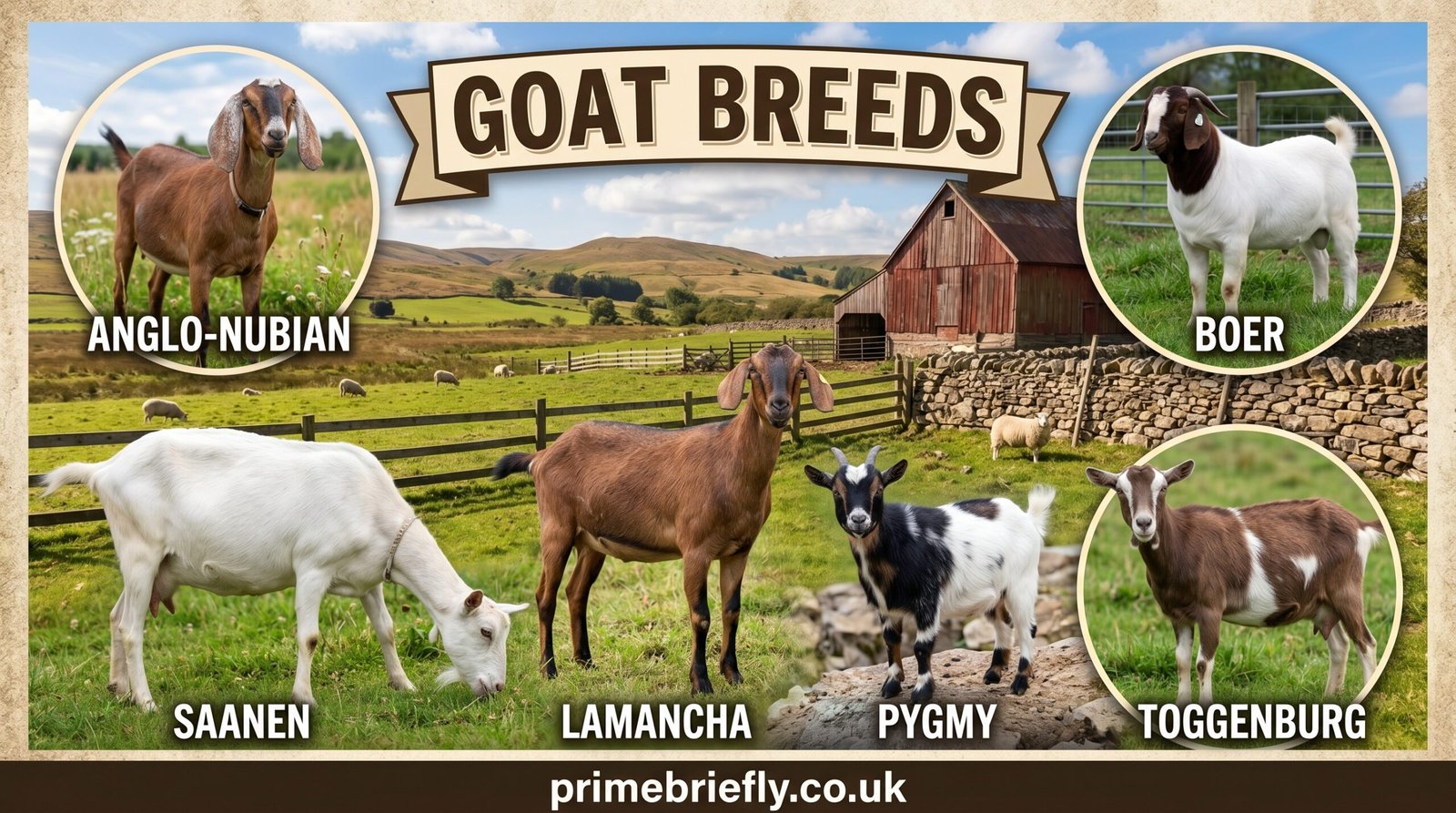
Breeds such as Saanen, Alpine, Toggenburg, Nubian, and LaMancha are among the most recognized dairy goats globally. Each breed has its own unique milk profile. For example, Saanen goats are known for producing large quantities of milk, while Nubian goats produce milk with higher butterfat content, making it ideal for rich dairy products.
Dairy goats are typically managed under intensive or semi-intensive systems where nutrition, health care, and milking routines are carefully controlled. Their milk production cycles are closely linked to breeding and kidding seasons, and with proper management, they can provide a steady milk supply for most of the year. In many rural areas, dairy goats are a critical source of nutrition and income, especially for small-scale farmers and women-led households.
Meat Goat Breeds and Their Importance in Livestock Farming
Meat goat breeds are primarily raised for their ability to produce high-quality, lean meat efficiently. These breeds are selected based on rapid growth rate, strong muscular structure, and feed efficiency. The Boer goat is one of the most famous meat breeds in the world and is widely used in commercial goat farming systems due to its excellent carcass quality and fast weight gain.
Other meat goat breeds such as Kiko and Spanish goats are known for their adaptability and resilience in different environmental conditions. These goats are often used in crossbreeding programs to improve meat production traits in local goat populations. Meat goats are typically raised under extensive or semi-intensive systems where they graze on natural vegetation and require less intensive feeding compared to dairy breeds.
Goat meat, commonly referred to as chevon, is an important source of protein in many cultures. It is leaner than beef and pork, making it increasingly popular in health-conscious markets. The global demand for goat meat continues to grow, especially in Asia, Africa, and the Middle East, where it is a traditional part of the diet.
Fiber-Producing Goat Breeds and Their Economic Value
Fiber goat breeds are specialized animals that produce high-value natural fibers used in the textile industry. The two most important fiber goat breeds are the Angora goat and the Cashmere goat. These breeds are not as widely distributed as dairy or meat goats, but they hold significant economic importance in luxury fabric production.
Angora goats produce mohair, a long, shiny, and durable fiber that is widely used in clothing, upholstery, and high-end textiles. Cashmere goats, on the other hand, produce a fine undercoat known as cashmere wool, which is extremely soft, lightweight, and highly valued in global fashion markets.
Fiber production depends heavily on climate, nutrition, and breeding management. These goats require specific environmental conditions to develop high-quality coats. The harvesting process, known as shearing or combing, is typically done seasonally. The fiber industry contributes significantly to rural economies in countries like China, Mongolia, Turkey, and South Africa, where fiber goat farming is well established.
Dual-Purpose Goat Breeds and Agricultural Flexibility
Dual-purpose goat breeds are highly valued in small-scale and subsistence farming systems because they provide both milk and meat. These breeds offer flexibility to farmers who need to maximize output from a limited number of animals. Nubian and Alpine goats are commonly considered dual-purpose breeds due to their balanced production traits.
These goats are especially useful in regions where farmers face resource limitations or fluctuating market demands. Instead of focusing solely on milk or meat production, dual-purpose breeds allow farmers to diversify their income sources. Their offspring can be raised for meat, while adult females provide milk for household consumption or sale.
Dual-purpose goat farming is widely practiced in rural communities across Africa, South Asia, and Latin America. It plays a crucial role in food security, poverty reduction, and sustainable agricultural development.
Regional Adaptation and Environmental Influence on Goat Breeds
Goat breeds have evolved to thrive in a wide range of environmental conditions, from arid deserts to cold mountainous regions and humid tropical zones. This adaptability is one of the key reasons goats are found almost everywhere in the world.
In hot and dry regions, goats tend to have lighter body structures, short coats, and high heat tolerance. In contrast, goats in colder climates often develop thicker coats and stronger body frames to withstand low temperatures. Mountain breeds are particularly known for their agility and ability to navigate steep terrains in search of food.
Environmental adaptation also influences feeding behavior and disease resistance. Indigenous goat breeds in developing regions are often more resistant to local diseases and parasites compared to exotic breeds. This makes them valuable genetic resources for breeding programs aimed at improving livestock resilience.
Physical Traits and Genetic Diversity Among Goat Breeds
The physical appearance of goat breeds varies widely and is closely linked to their genetic background and purpose. Traits such as ear length, horn shape, body size, and coat texture are commonly used to identify different breeds. For example, Nubian goats are known for their long, drooping ears, while Boer goats are recognized for their robust bodies and white coats with red markings.
Genetic diversity within goat populations is essential for maintaining healthy and productive herds. It allows for better disease resistance, improved fertility, and adaptability to changing environmental conditions. Modern breeding programs often focus on preserving this genetic diversity while enhancing desirable production traits.
Behavioral characteristics also vary between breeds. Some goats are calm and easy to manage, while others are highly active and require more careful handling. Understanding these traits is important for effective herd management and welfare.
Goat Breeding Practices and Herd Improvement Strategies
Goat breeding is a critical aspect of livestock management that directly influences productivity and profitability. Farmers use selective breeding techniques to improve traits such as milk yield, growth rate, and disease resistance. Controlled mating systems ensure that only the best-performing animals are used for reproduction.
Crossbreeding is also commonly practiced to combine desirable traits from different breeds. For example, crossing a dairy breed with a meat breed can produce offspring with balanced milk production and better body weight gain. This strategy helps farmers optimize their herds according to market demands.
Proper herd management includes monitoring reproductive cycles, maintaining genetic records, and ensuring balanced nutrition. These practices contribute to long-term sustainability and improved herd performance.
The Global Importance and Future of Goat Breeds
Goat breeds play a vital role in global agriculture, particularly in regions where other livestock may not thrive. They provide essential nutrients, income opportunities, and employment for millions of people worldwide. Goat farming is especially important in developing countries where it supports rural livelihoods and food security.
With increasing global demand for sustainable and efficient livestock systems, goat farming is expected to grow further. Advances in genetics, veterinary care, and nutrition are helping improve productivity while reducing environmental impact. Goat breeds are also being studied for their role in climate-resilient agriculture due to their adaptability and low resource requirements.
The future of goat farming depends on preserving genetic diversity, improving breeding techniques, and supporting smallholder farmers. As global food systems evolve, goats will continue to be one of the most important and reliable livestock species.
Conclusion: Why Understanding Goat Breeds Matters
Understanding goat breeds is essential for anyone involved in livestock farming, agricultural research, or rural development. Each breed offers unique advantages, whether in milk production, meat quality, fiber output, or environmental adaptability. Choosing the right breed can significantly impact farm productivity and sustainability.
Goats have proven their value over thousands of years, adapting to diverse environments and supporting human societies across the globe. As agriculture continues to modernize, goat breeds will remain a cornerstone of sustainable farming systems, offering reliable resources and economic opportunities for future generations.
